
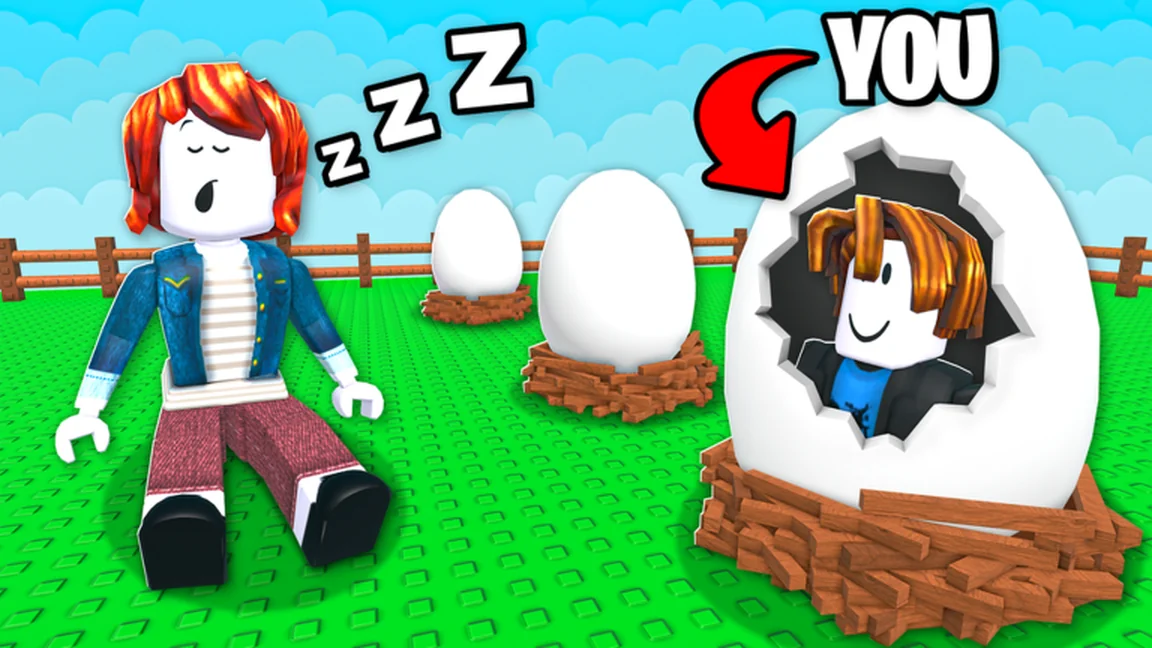
What should you do in the first 15 minutes?
Run a short loop that produces a baseline: choose a landmark, walk the route out and back, watch one interaction, make one low-risk attempt and write down one number. The point is not to earn as much as possible. It is to leave with a record you can compare against your next session.
The checklist below assumes no prior knowledge of the map, prices or controls. It uses only what you can see in your own session. If a step does not match the interface in front of you, stop and record the difference instead of forcing the step.
Before you join
- Confirm the exact experience: Fake an Egg by Slime Time Studios, place ID 97289366402005. Similarly named egg games are not this game.
- Choose graphics and UI settings you can keep for the whole session. Changing them midway makes visual comparisons unreliable.
- Pick a landmark visible from the starting area and from the route you plan to walk.
- Set a spending cap of zero for the first session. You are collecting a baseline, not shopping.
- Open a note with five fields: landmark, route time, displayed rate, egg label and one surprise.
The 15-minute checklist
Minutes 0-3: orient without moving far
Look around the starting area and choose the landmark. Walk far enough to see it from a second angle, then return. Do not combine this with a pickup or a purchase.
Minutes 3-6: time one route
Time a one-way walk from the landmark to a second fixed point, then walk back. Record seconds and note anything that interrupted the trip. This is your unloaded baseline, not a claim about carrying speed.
Minutes 6-10: observe one interaction
Watch a player approach an egg from a safe distance. Note the prompt, the approach angle and what happened next. Do not interfere and do not assume the egg's state from appearance alone.
Minutes 10-13: make one low-risk attempt
Use one live prompt with an exit in view. If the action fails, record the response instead of repeating it immediately. Repeating an unfamiliar action without changing the conditions adds noise, not evidence.
Minutes 13-15: close the record
Fill the five fields, then name the bottleneck in one sentence. Choose the next guide based on that sentence rather than on a rare item you saw somebody else use.
A record you can compare later
| Target | Field | What to write | Example |
|---|---|---|---|
| Displayed rate | Displayed rate | Value, unit, pet label, boost | $4/s, Bunny, 2x boost active |
| Egg label | Egg label | Exact wording and prompt | Bunny Egg, Common, Hatch |
| Landmark | Landmark | One fixed, visible feature | Blue nest beside the spawn arch |
| Next question | Next question | One sentence, one variable | How much slower is the route with an egg? |
| Route | Route | Start, finish and seconds | Nest to arch, 18 s, no egg |
When should you stop?
Stop when you cannot explain how to get back, when you have made the same guess twice without changing the conditions, or when you notice yourself spending to recover a bad result. None of those states produces a useful comparison, and all of them make the next decision harder.
A practical stop rule is two failed attempts at the same question. At that point, change the question rather than the stakes: measure the route, read the label or ask a friend to help with a controlled test. Leaving with a clean note is more useful than staying with a confused one.
End the session by writing the date, the game version if one is visible, and anything that changed during play. The date matters because a future session may not share the same prices, labels or interface. This wiki uses review dates for the same reason rather than promising that old values still apply.
Use the checklist with
Understand the premise first
Read the beginner guide if you have not played the loop before.
Open the beginner guideTurn the route time into a measurement
Compare loaded and unloaded trips using your own seconds.
Open the calculatorTest a suspected tell
Use a blind, consenting comparison instead of a single guess.
Plan a co-op testFirst-session checklist questions
Do I need to buy an egg on the first session?
No. The checklist is designed to produce a baseline without spending. If you choose to buy, record the displayed cost and the reason before the purchase so you can review the decision later.
What if the route changes while I am timing it?
Discard the timing and start again from the same landmark. A route with a detour measures a different distance. Write down what interrupted the trip so the next attempt can avoid it.
Is a phone screen good enough for this checklist?
The record works on any device, but visual comparisons are harder on a small screen. Keep the same device and settings for a test. If you switch devices, treat the new observations as a separate set rather than mixing them.
Sources and evidence boundaries
- Fake an Egg — official Roblox experience
The public experience description identifies Fake an Egg by Slime Time Studios and its egg-disguise and pet-stealing premise. It does not supply a pet database, current codes, hatch odds, income multipliers or a carrying-speed formula.
Accessed - Fake an Egg — Mr Red Dangerous
Actual introductory gameplay frames reviewed on 2026-10-17 show Bunny Egg at 0:10, Bunny and RAINBOW Cat at 1:00, and Chicken Egg variants at 2:40. Bunny displays $3/s in that session; Cat income is obscured. Capture date, active boosts, current base rates, mutation multipliers and hatch odds are not established.
Accessed